Were Romans ever at Caerfai? Radiocarbon dating reveals a surprising truth in Pembrokeshire
It’s well known that the Romans covered most of Wales, building new forts as well as re-using old ones. But did they ever take control of Caerfai – one of the most impressive surviving Iron Age hillforts along the Pembrokeshire coast? Radiocarbon dating may have finally provided the answer…
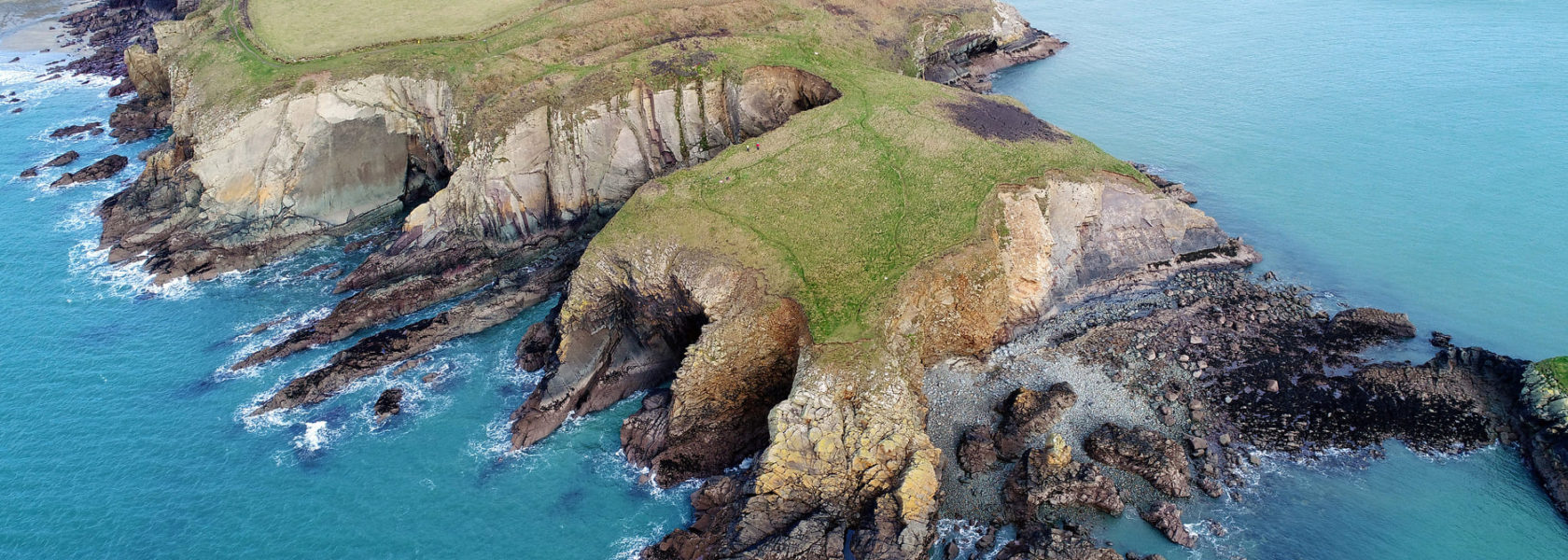
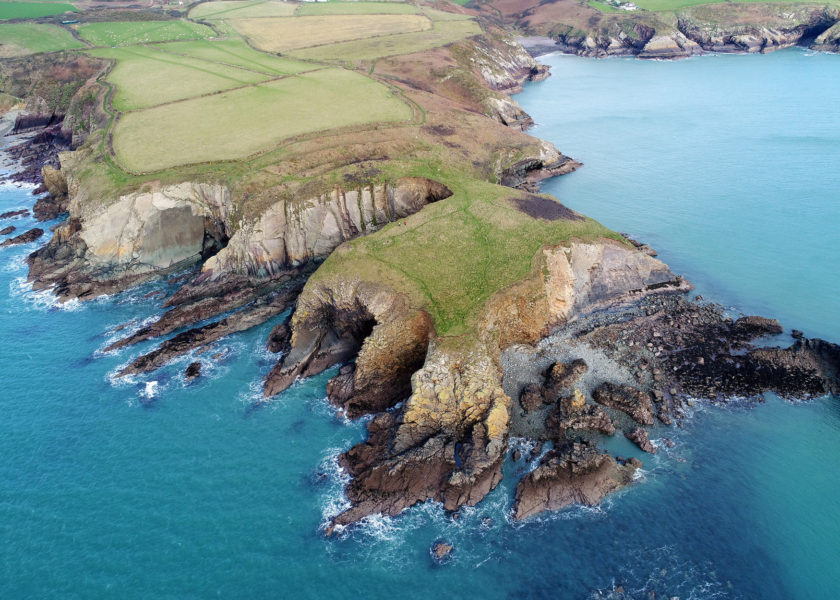
Caerfai is one of the most impressive promontory forts along Pembrokeshire’s dramatic coastline, and the closest to St David’s. Marked by four impressive ramparts facing out towards the sea, this sentinel of prehistory has held onto its mysteries for centuries.
But this remarkable archaeological treasure is locked in a desperate race against time. Coastal erosion is slowly eroding the site, with climate change accelerating its destruction. In recent years, the rate of erosion has been increasing, with around 1m of land being lost to the sea annually.
Recognizing the urgency, the CHERISH Project invited DigVentures to lead a critical rescue mission. Thanks to funders and crowdfunders, we were able to lead three community-led excavations between 2021 – 2023. The dig, which featured on BBCs Digging For Britain, collected key archaeological evidence that began to breathe life back into the story of this ancient site.
And one thing really stood out; apart from a couple of fragments of ambiguous pottery, there was no trace of the Romans. Unlike many other Iron Age forts along this stretch of coast, it looked like the Romans didn’t come here.
Were we simply missing the evidence of their presence? Or was it possible that the Romans never occupied Caerfai? Why would they ignore such a strategically positioned coastal fort? Were these ambiguous pottery fragments really evidence of Roman activity – or something else entirely?
Now, thanks to radiocarbon dating, it has revealed a surprising narrative: those ambiguous fragments aren’t Roman, and Caerfai was likely never occupied by the Romans.
Instead, this sophisticated settlement was abandoned long before they arrived, leaving an intact footprint of the prehistoric community who preceded them. And those ambiguous pottery fragments? Well, they’re helping to rewrite our understanding of Iron Age technology and trade in Wales…

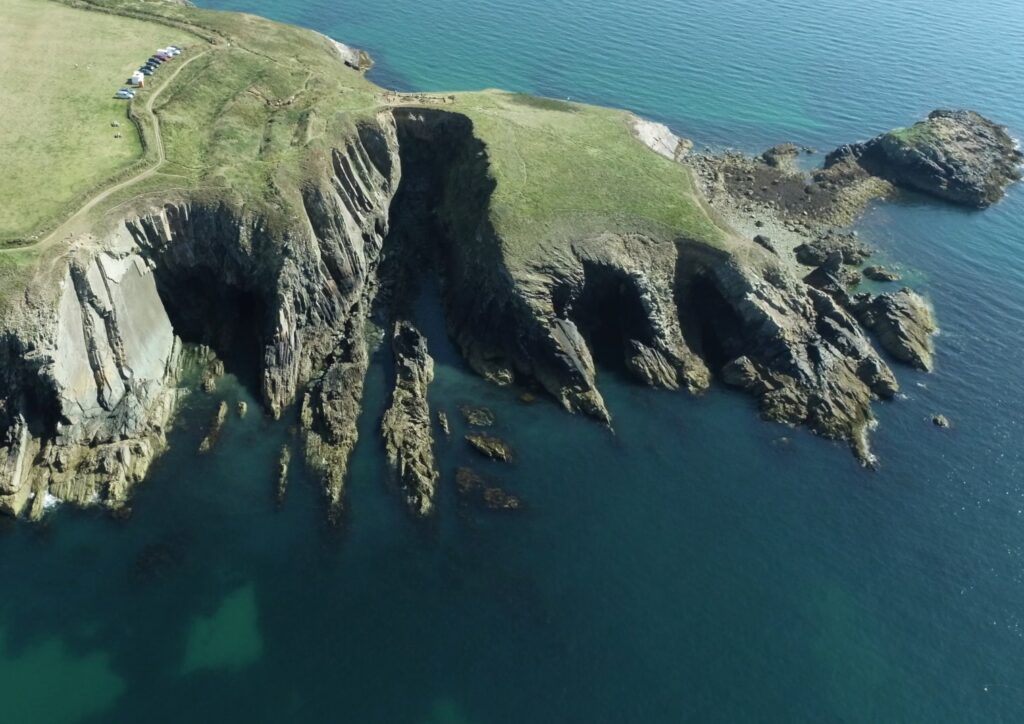
Caerfai Promontory Fort, Pembrokeshire (DigVentures)
How radiocarbon dating is solving a Roman mystery… and transformed our understanding of Caerfai
Radiocarbon dating organic material collected from above and below key buried structures such as roundhouses, hearths, and ditches provide can provide “bookends” for a site’s occupation.
Results from three carefully selected samples revealed that Caerfai had been occupied between c.700 – 200 BC and placing this site firmly within the middle of the Welsh Iron Age, which began around 800 BC.
The results aren’t just numbers – they’ve unlocked the opportunity to understand key details about ancient society in Wales prior to Roman cultural influence. Having fallen out of use two centuries before the Romans set foot in the area may explain the curious absence of Roman artefacts uncovered at Caerfai Promontory Fort.
It also shows us that all the evidence on site of metalworking, textile industry, and salt or copper extraction was all happening before the arrival of the Romans within and between communities along the Welsh coast and across the Irish sea.
What’s more, it gives us the potential to revisit lost secrets from other Iron Age communities across the Pembrokeshire coast.
A Pottery Revolution?
Radiocarbon dating has confirmed when the site was in use, but it is also shifting our understanding of prehistoric pottery.
The ‘ambiguous fragments’ we found on site included pieces of briquetage (pottery used in salt extraction), crucible and hearth lining (pottery used in metalmaking), as well as crude pottery sherds. The materials used for these types of ceramics were rough and hardly changed for centuries, making it very difficult for us to tell if they had been made in prehistory or by Romans just by looking at them.
Radiocarbon dating means that these fragments, which originally presented us with a tantalising mystery, can now be confidently dated between 700 – 200 BC.
In a region where Iron Age pottery has been maddeningly scarce, this finding is like winning the archaeological lottery!
With this information, we can start to build a more detailed database of dated prehistoric pottery in the region, to help refine our understanding of the technologies of the time: how they were making pottery and with what materials. This vital information has an impact on Welsh archaeology as a whole – creating resources which can help archaeologists identify and date ceramics found at other prehistoric sites in the region.

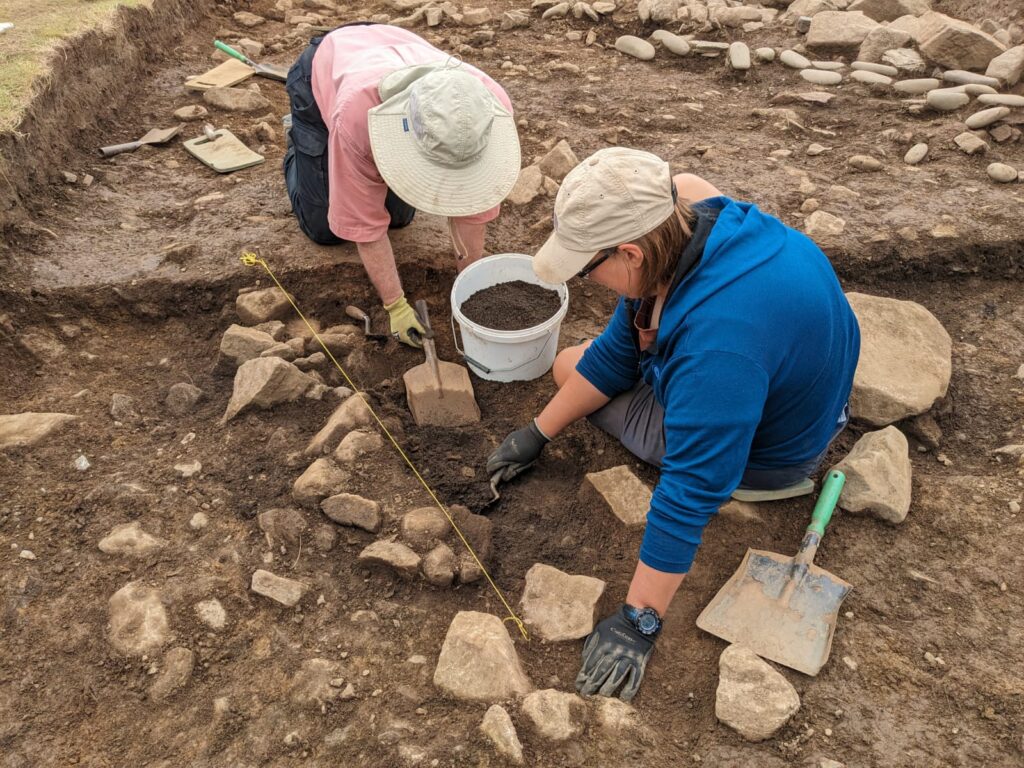
Crowdfunders uncover evidence of stone buildings at Caerfai Promontory Fort, 2023 (DigVentures)
Other discoveries
Over three excavation seasons, our team discovered archaeological evidence which proved that this wasn’t just a defensive fort, but a bustling prehistoric community for industry and trade.
As well as sophisticated defensive ramparts cut deep into the bedrock, our community helped to uncover two stone-built roundhouses, multiple hearths, and evidence of metalworking, textile industry, and now possibly salt extraction – all happening between Celtic communities and using Celtic technology.

Excavations at Caerfai Promontory Fort, 2023 (DigVentures)
Topographical and archaeological evidence provided by DigVentures and CHERISH project helped to reimagine how this community once looked, as illustrated in a reconstruction created by Wessex Archaeology.


A reconstruction showing Caerfai around 50 BC. A Mediterranean ship arrives to trade with the locals, while the cliffs are mined for copper ore. The image was created by Wessex Archaeology on behalf of CHERISH Project, using evidence from crowdfunded excavations by DigVentures. (CHERISH Project/Wessex Archaeology)
Alongside structural evidence, artefacts found included spindle whorls, fragments of pottery, copper and iron slag, sling stones, and whetstones – painting the picture of a vibrant coastal trading community.
The people who lived here were skilled craftspeople and traders, with links to trade routes extending towards Ireland and the Mediterranean.
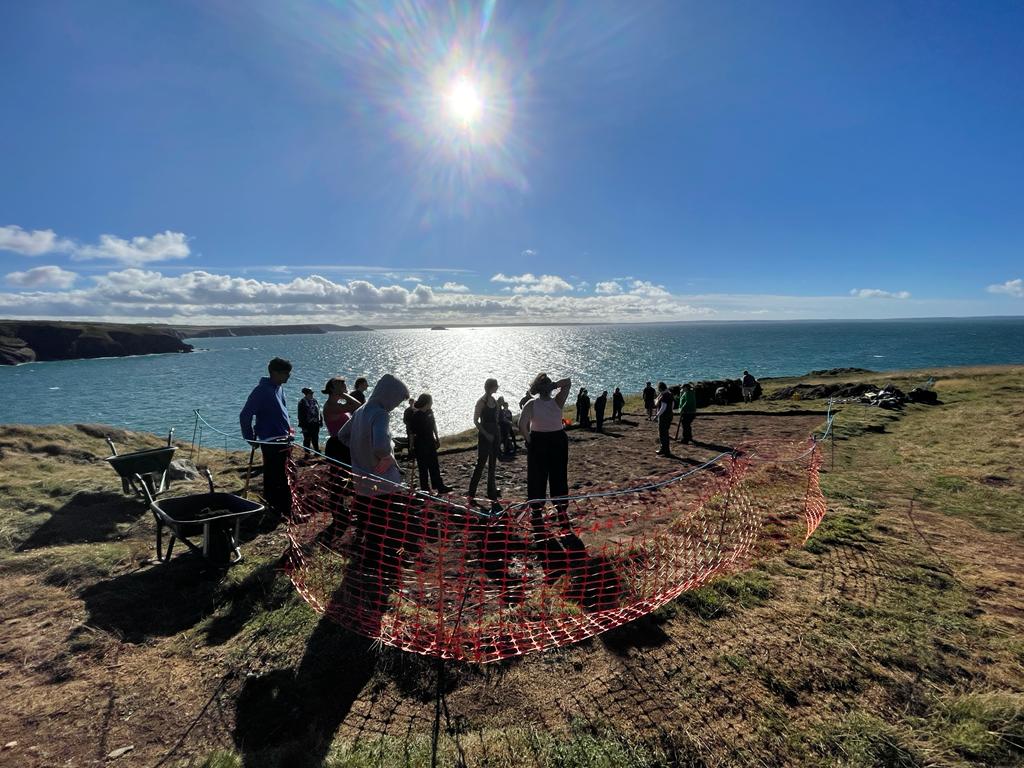
Excavations at Caerfai Promontory Fort, 2022 (DigVentures)
What’s next?
This discovery only highlights the importance of rescue archaeology, particularly in the face of Climate Change. While coastal erosion may have already destroyed a wealth of potential evidence at Caerfai Promontory Fort, these three radiocarbon dates have already rewritten our understanding of this remarkable site, and Welsh archaeology as a whole.
Research into this site continues, with a final report to be published on our website following analysis. Head to the project page to find out more.
Want to be a part of the next groundbreaking discovery? Support one of our crowdfunded digs as a Radiocarbon Rockstar and help us to date important archaeological sites across the UK and beyond!