
People-Powered Nature Recovery: A Digital Revolution in Landscape Transformation

From tracking the pollution in our rivers to mapping habitats from satellite data, citizen science – where members of the public participate in scientific research – has grown from a casual hobby into a vital tool for nature recovery.
But what if we’ve barely scratched the surface of this potential? What if citizens could do more?
Citizen science traditionally operates in isolation from core organisational activities, with the resulting environmental data necessary for nature recovery trapped in separate databases and platforms. Its potential impact for citizens is also constrained, with both technical and participatory barriers diminishing its ability to build diverse communities beyond traditional volunteer demographics.

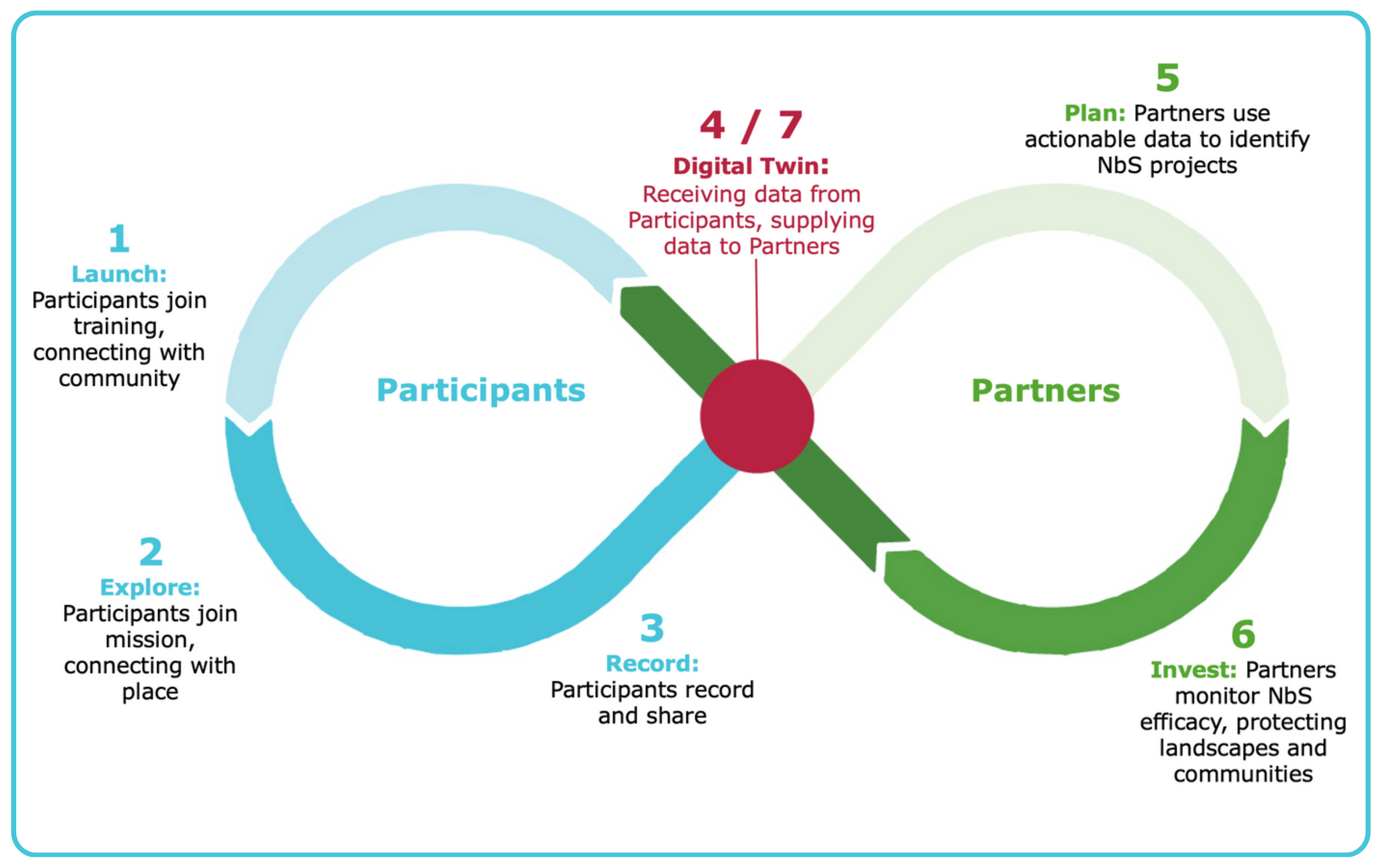
Deep Time’s High Level Workflow, showing the relationship between participant-generated data and partner data, and how this combined data can be used.
The challenge lies in connecting two different worlds. On one side, large institutions and government agencies often struggle to incorporate public contributions into their formal decision-making processes. While appreciative of public involvement, there’s still a persistent perception that citizen science is merely a helpful add-on rather than an essential tool for conservation. On the other, community groups collecting valuable environmental data frequently lack the connections needed to ensure their findings inform official decision-making. What’s needed is a bridge between these two approaches – one that can transform enthusiastic public participation into actionable insights for conservation.
Working with seven nature recovery partners, and supported by Defra’s flagship innovation programme, we’ve begun building this bridge. Our solution is a new digital platform combining citizen-led monitoring with satellite imagery and AI generated mapping, connecting the organisations responsible for nature recovery and the communities hoping to get involved.

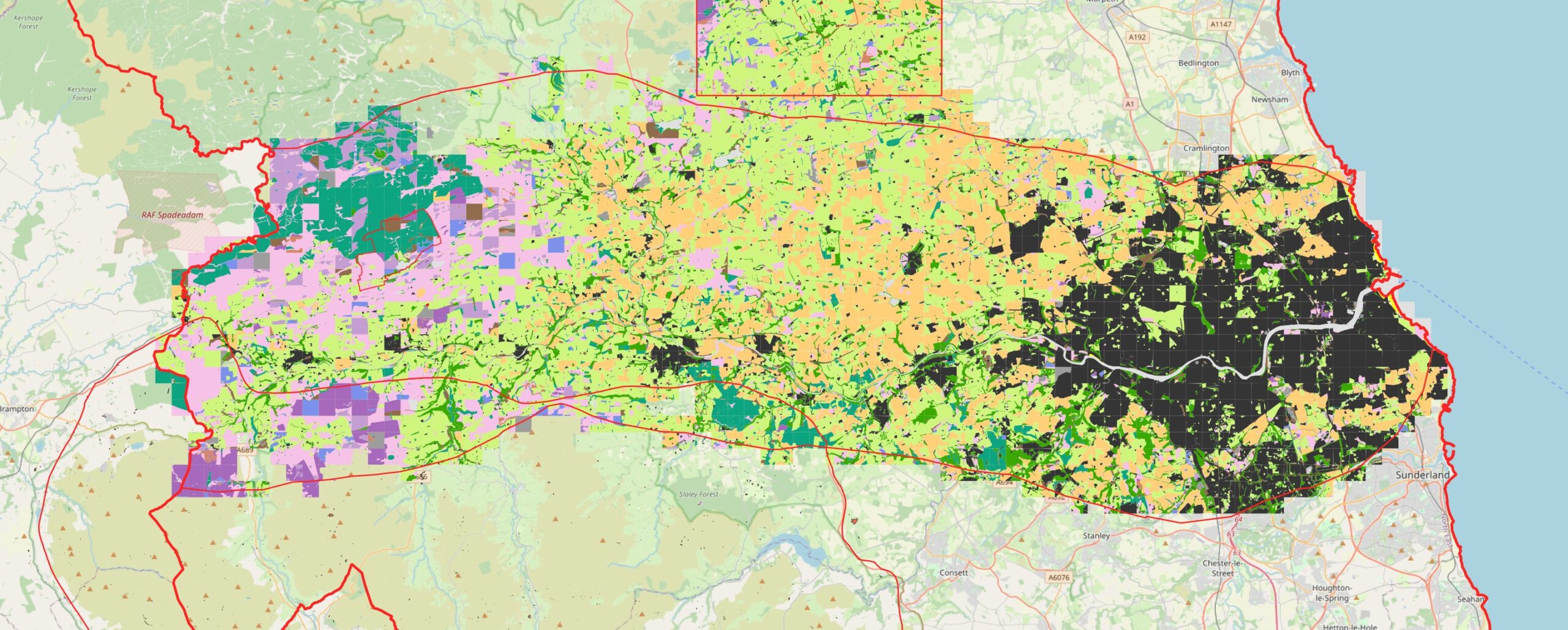
Colour coded Futurenaut polygons representing 16 broad habitat types across Hadrian’s Wall Corridor.
In just a few short weeks, this new approach has produced remarkable results. Over a thousand citizens have helped monitor an area larger than the county of Cornwall, working alongside major conservation organisations including Wildlife Trusts, National Landscapes, and a National Park to map over 57,000 polygons of varied habitat types. What makes this particularly exciting isn’t just the scale – it’s who’s getting involved. Many of these citizen scientists are newcomers to environmental work, bringing fresh perspectives and enthusiasm to nature recovery efforts.

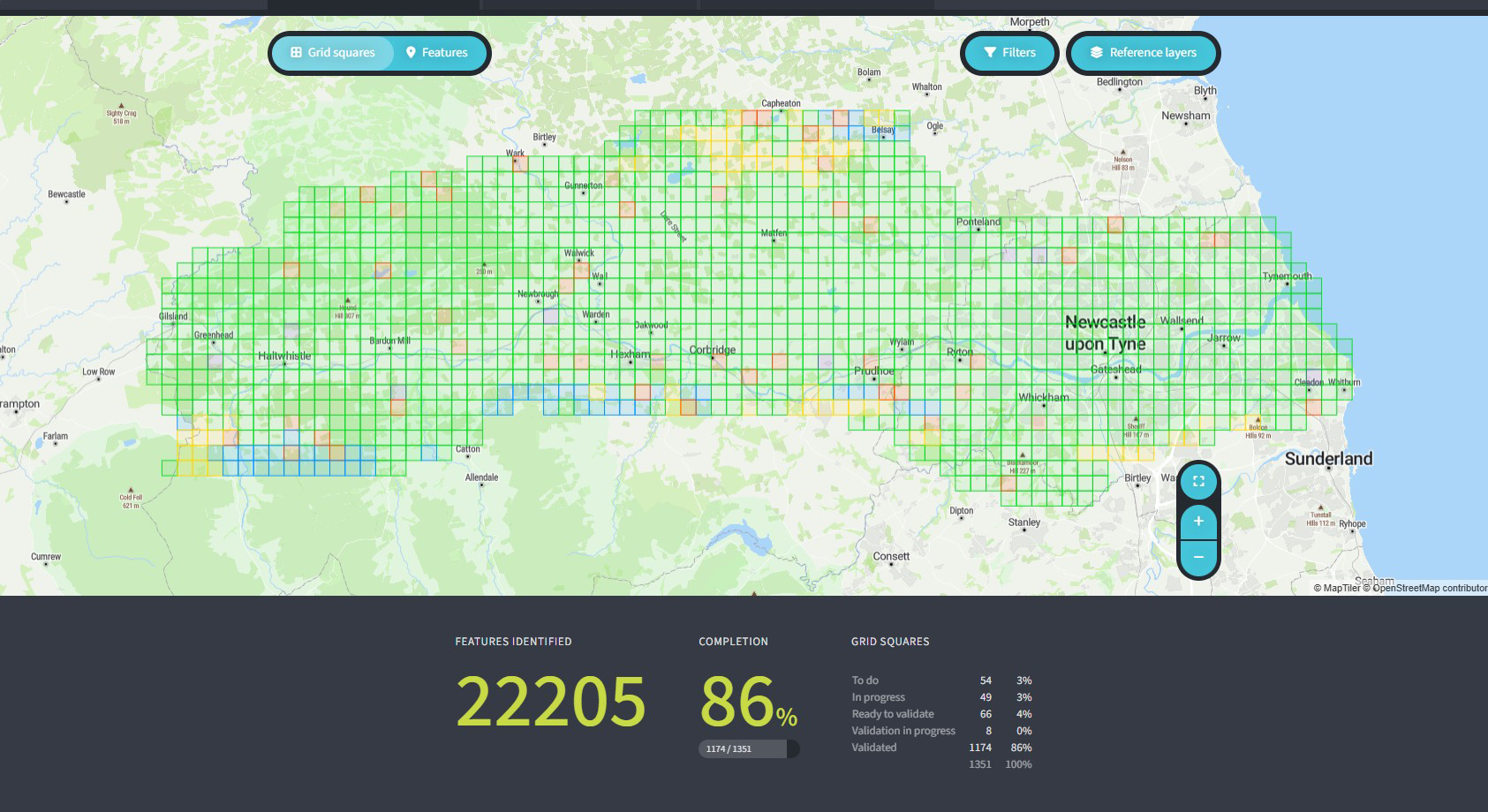
Deep Time’s Partner Dashboard, showing the real-time progress of Deep Time missions.
Our next step is to help turn this enriched picture of landscapes into actionable strategies, embedding citizen participation into the day-to-day practice of nature recovery organisations. Through a series of collaborative design sessions with our project partners, we’ve begun exploring how to align citizen-collected data with their organisational management needs and broader conservation strategies.
Citizen Science isn’t just about collecting data – it’s about building a new kind of community that can actively participate in restoring nature, and work hand in hand with the organisations and institutions responsible for our landscapes. When given the right tools and support, people from all walks of life can contribute meaningfully to conservation efforts. As we face growing environmental challenges, this combination of technology and public participation offers a powerful road map for the future, closing crucial gaps in our understanding of the natural world, and empowering citizens to get involved.