

Uncovering Layers of History at Lytham Hall
Always wanted to try archaeology? Looking for a new challenge in 2026? Or perhaps you’ve watched Time Team and wondered how archaeologists actually know where to dig, or what they’re looking for once the turf’s off?
Enter Lytham Hall in Lancashire – your perfect jumping-on point. Join us in July to learn how professional archaeologists piece together the past, build new skills and put them to the test as you learn how to uncover real finds at a site where you don’t have to choose just one century.
Beneath the 18th century grandeur of this Grade I listed Georgian country house and its 78-acre historic parkland lies a much older story. From an early medieval Benedictine priory to generations of evolving estate life, the site of Lytham Hall has been continuously reshaped by faith, fortune and community. For centuries, much of its history has remained buried, until now…
A new era of discovery
Thanks to the stewardship of the Heritage Trust for the North West, the Friends of Lytham Hall and the expertise of DigVentures archaeologists, a new chapter began for Lytham Hall in August 2025, as we started to explore what has survived following generations of change layered on top of each other.
29 volunteers aged 12+ (including 20 people brand new to archaeology) joined us to learn how to lay out and dig test pits, carefully excavating small, targeted trenches across the Hall’s grounds and gardens. Together, we were on a mission to find out more about suspected features highlighted during previous research into the Hall’s lost history, including:
- Early garden features, including the estate’s historic Knot Garden
- An 18th century sunken boundary known as a ha-ha, keeping grazing livestock out of sight while preserving the illusion of uninterrupted rolling gardens
- A suspected 18th century ice house used to store imported ice for food preservation
- Evidence of early medieval activity related to agriculture
- The site’s earliest known building – a 12th century Benedictine priory founded by monks from Durham, who established a self-sufficient community at Lytham

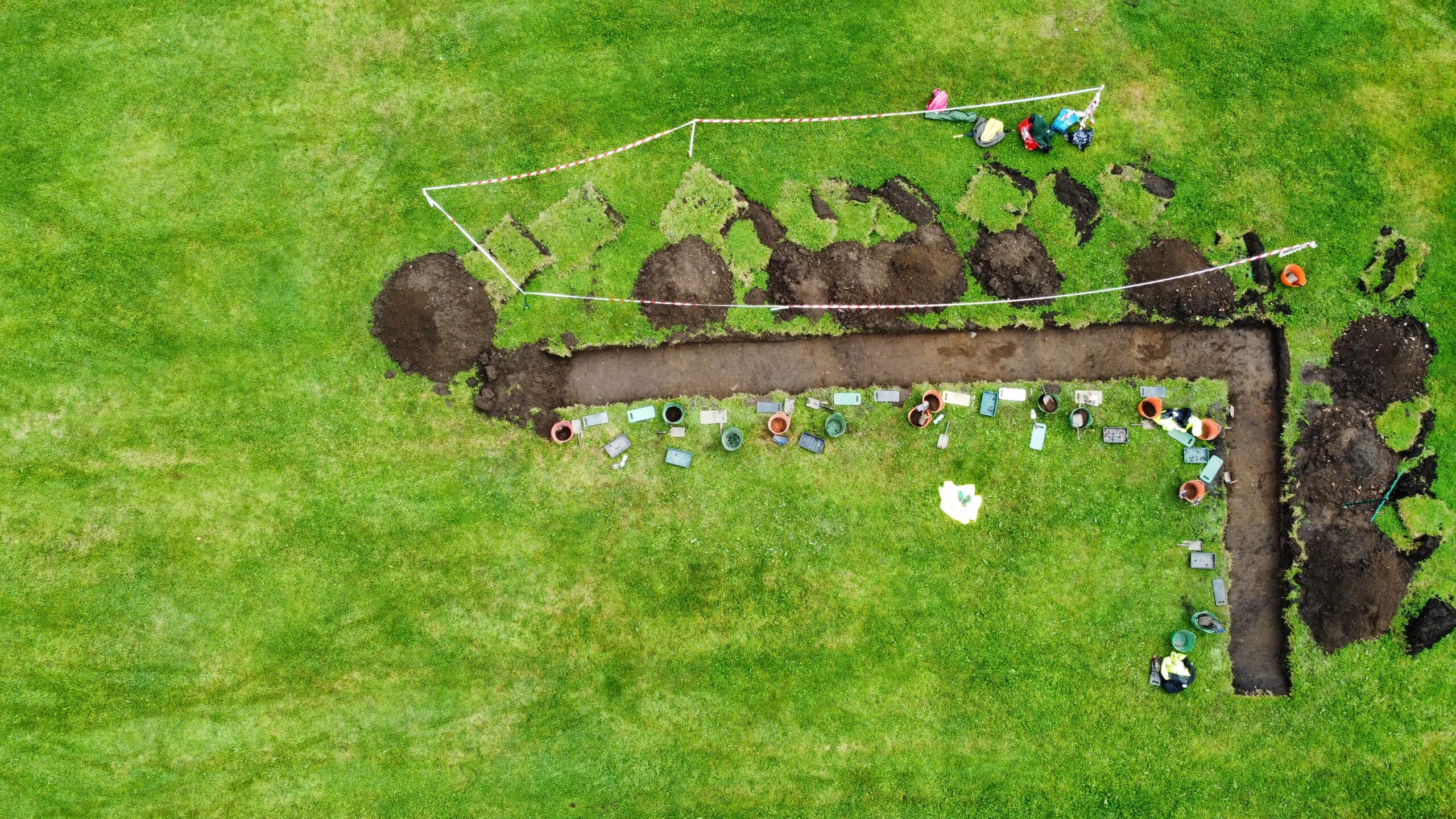
Credit: DigVentures
Over just one weekend, our community unearthed 172 artefacts dating from the 1700s to the 1900s, from fragments of window glass, wine bottles and tableware to clay tobacco pipes, nails, roofing slate, animal bones and traces of hearth ash.
Each find uncovered so far has helped piece together the everyday details of Lytham Hall, offering a glimpse into land use and life here across time, and it’s easy to picture an estate bustling with family, servants, gardeners and craftsmen.
Join us in Lancashire this July
Despite major changes between the 18th and 19th centuries, from shifting boundaries to redesigned parkland and the expansion of nearby Lytham St Annes, much of the Hall’s past is still waiting to be discovered. Aerial imagery, LiDAR (detailed aerial surveys taken of the ground’s surface using lasers) and other previous research hint at forgotten features across the Hall’s grounds – and this year, you can help us step closer to uncovering them.
Who knows what traces of early life on the estate might still lie beneath Lytham Hall’s surface? Could we trace the original garden paths? Chance upon a hidden wall of the ice house? Or even stumble across traces of early priory life?
Crowdfund the dig to play a key role in exploring the gaps that may still remain in the Hall’s official history, and help us piece together how the estate has grown and changed over time.
Along the way, you’ll learn all the key field skills used by archaeologists to make a real discovery. Starting with an introduction to trowelling, you’ll soon learn how to spot archaeological features like walls, postholes and floor surfaces, and how to identify artefacts like pottery, glass and animal bone. Before long, you’ll be piecing together the evidence to uncover the real story hidden beneath Lytham’s grounds, all under the guidance of our friendly archaeologists.


Credit: DigVentures
Whether you’re curious about archaeology, considering a future in the field or simply want to learn how archaeologists read the ground beneath their feet, Lytham Hall is the ideal place to start. Get hands-on, get a little bit dirty and help us unearth the next layer of the Hall’s story in the process.
Visit this page to find out more about our dig in Lancashire this summer and how you can get involved in Lytham Hall’s new chapter, from your name in the report to immersing yourself in the trenches or Finds Room.