People-Powered AI: Deep Time’s Inclusive Path to Nature Recovery
As we face growing environmental challenges, the promise of artificial intelligence (AI) technology and Earth Observation Data (EO) offers a powerful road map for the future, closing crucial gaps in our understanding of the natural world.
But how can we ensure that citizens have the opportunity to participate in the AI revolution?
At the core of Deep Time, we believe that enhancing the world through AI should work for the many, not the few. We believe that using participatory methods to bring public voices into the design and development of AI models is one way to build fairer, more accurate and trustworthy AI systems.
In 2024 we formed a partnership with Living England – a UK Government funded AI initiative, creating a habitat probability map derived from Earth Observation (EO) data. The opportunity for citizen participation stems from spatial AI’s current limitations: a reliance on incomplete human-generated training data; largely untested data results; and the need for professional interpretation and extensive field validation.

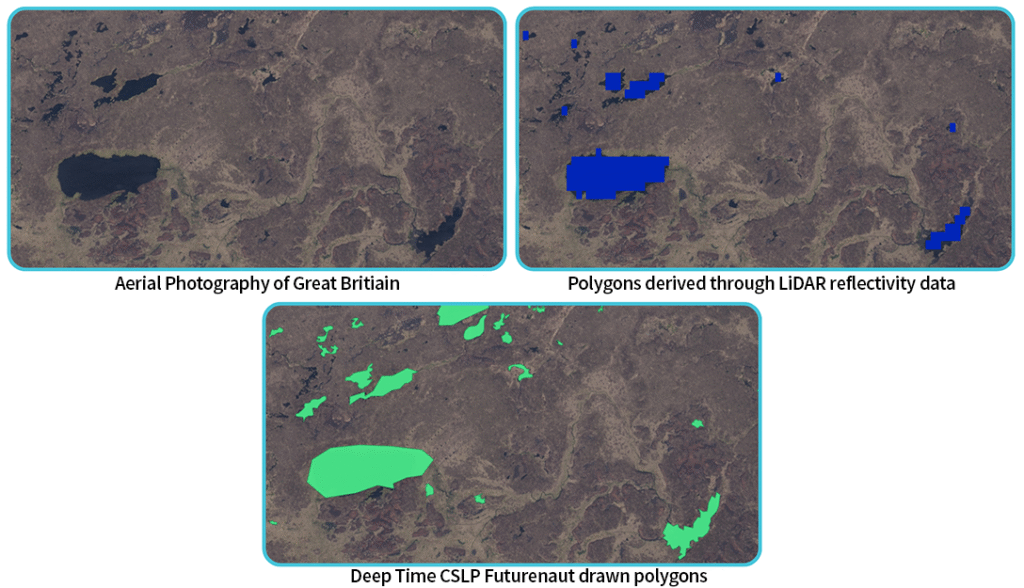
Comparison of Deep Time dataset compared to the polygons created using LiDAR reflectivity.
Through a human-in-the-loop citizen model we addressed these shortcomings, substantially improving the coarse AI data of broad habitats into highly accurate, quality assured spatial polygons. This was achieved through the combination of three key technologies: spatial AI, a participatory Geographic Information System enabling citizens to map and integrate various data sources, and a learning management system empowering non-specialists to make scientifically valid contributions.


The Deep Time platform and training materials.
By combining the collective intelligence of people and the power of digital technologies, this proven model has generated data for nature recovery and provided a tangible pathway for communities to engage in landscape transformation.
In just a few short weeks, this new approach has produced remarkable results. Over a thousand citizens have helped monitor a 4,800 km² area, working alongside major conservation organisations including Wildlife Trusts, National Landscapes, and a National Park to map over 57,000 polygons of varied habitat types. The scope of landscape data is comprehensive: from the North Pennines’ 7,430 water bodies across 2,369 km² to Hadrian’s Wall corridor’s 20,826 habitat types across 1,120 km². The Wallington estate contributed 6,456 habitat types across 315 km², while Brightwater Landscape documented 11,646 habitat types across 483 km², and 500 km² on the Northumberland Coast, with all data undergoing rigorous quality assessment. Our next step is to help turn this enriched picture of landscapes into actionable strategies, embedding citizen participation into the day-to-day practice of nature recovery organisations, and use our augmented data sets to train better spatial AI.

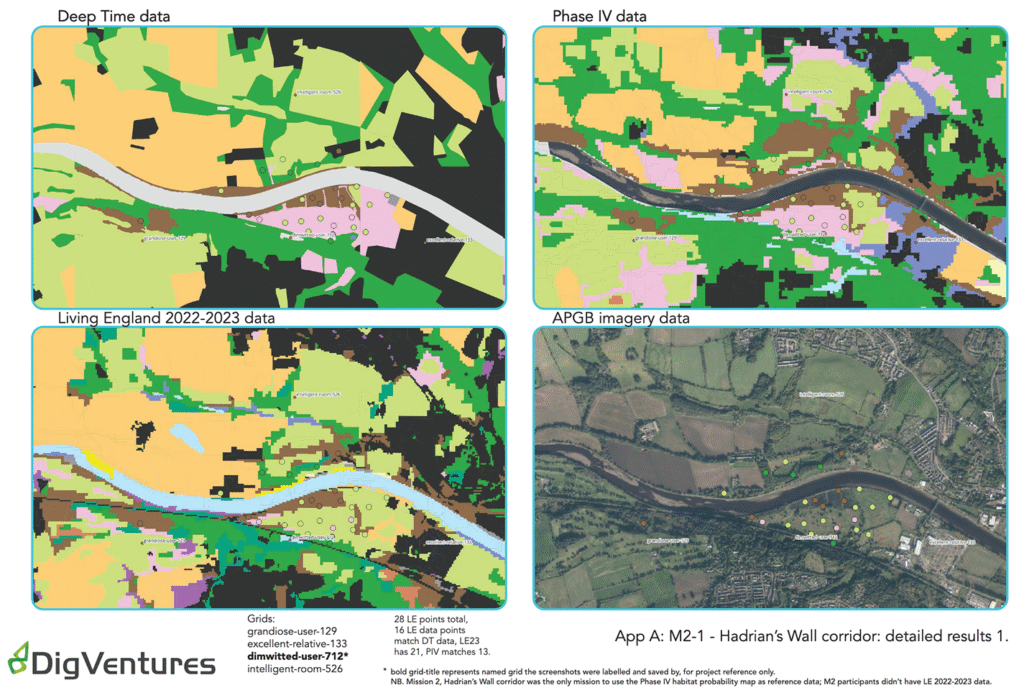
Hadrian’s Wall corridor: detailed results showing Deep Time data (generated by citizen scientists) and the AI-generated data (provided by Living England)
What makes this particularly exciting isn’t just the scale – it’s who’s getting involved. Many of these citizen scientists are newcomers to environmental work, bringing fresh perspectives and enthusiasm to nature recovery efforts. This approach has yielded remarkable data for conservation organisations, bridging national environmental policy with grassroots action. But it’s also marked a profound shift for climate-vulnerable communities themselves: 39% reported increased interest in local climate impacts, while 32% felt motivated to join other climate initiatives. Perhaps most significantly, 36% expressed greater optimism about the future, and 24% noted reduced climate anxiety.

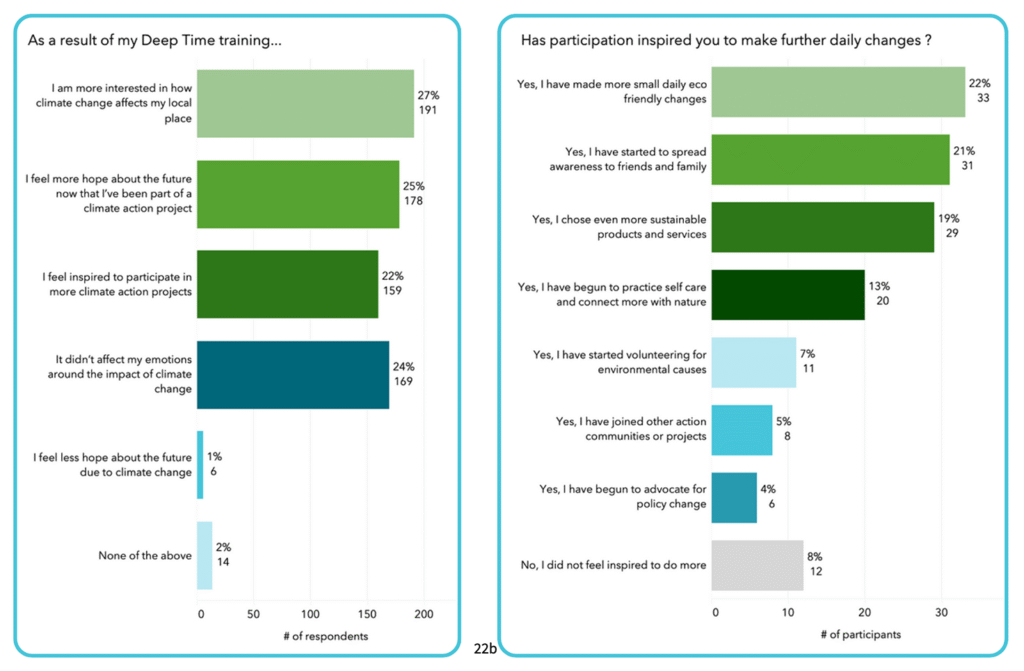
Post-mission citizen scientist survey results showing changes in perception and behaviour.
If nature recovery organisations want AI tools to be better than they currently are – more accurate, fair and trustworthy, as well as focusing on applications that advance the public good – then a citizen-centred approach needs to first and foremost. And equally importantly, if we are to identify and reduce the potential harms of this technology, we need to work with the groups that are typically furthest away from the design of AI systems but stand to be most impacted.
Citizen Science isn’t just about collecting data – it’s about building a new kind of community that can actively participate in restoring nature, and work hand in hand with the organisations and institutions responsible for our landscapes. When given the right tools and support – including AI and EO – people from all walks of life can contribute meaningfully and equitably to conservation efforts.