Collective Intelligence for Nature Recovery
This blog previously appeared as an article in The Archaeologist Magazine, Issue 124 | Winter 2025, pg 22-25
As professional archaeology ramps up efforts to decarbonise workflows, DV Founder and Co-CEO Brendon Wilkins argues that it’s also time to address the other elements of net zero directly in our path: biodiversity and habitat loss.
Stood tall at the vanguard of development, conducting vast orchestras of yellow machines, archaeologists are often the last people to see the landscapes as they once were. We justify this process of loss as necessary for society’s economic growth, and ‘de-risk’ development through careful mitigation of negative impacts, or ‘add value’ by doing good elsewhere. But what of the unintended consequences of this incessant march for growth?
The archaeology profession is rightly coming to terms with its responsibility to decarbonise, but this is just one side of the net zero coin. Climate change and biodiversity loss are linked, and in the UK, these stand at a pivotal moment. The Government’s State of Nature Report identified a 19% decline in UK species since 1970, with one in six species at risk of extinction. As society grapples with climate change and environmental degradation, a deep commitment to the oceans, forests, peatlands and other natural carbon sinks is equally needed to reach equilibrium and shield humanity from further effects of fossil fuel pollution.

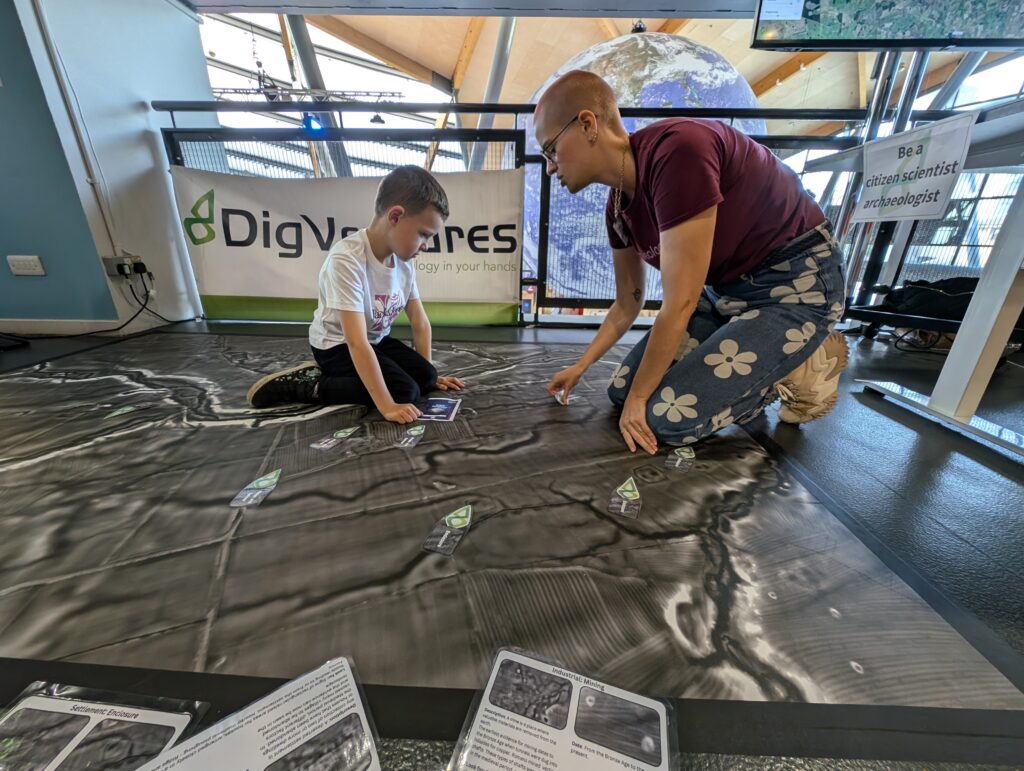
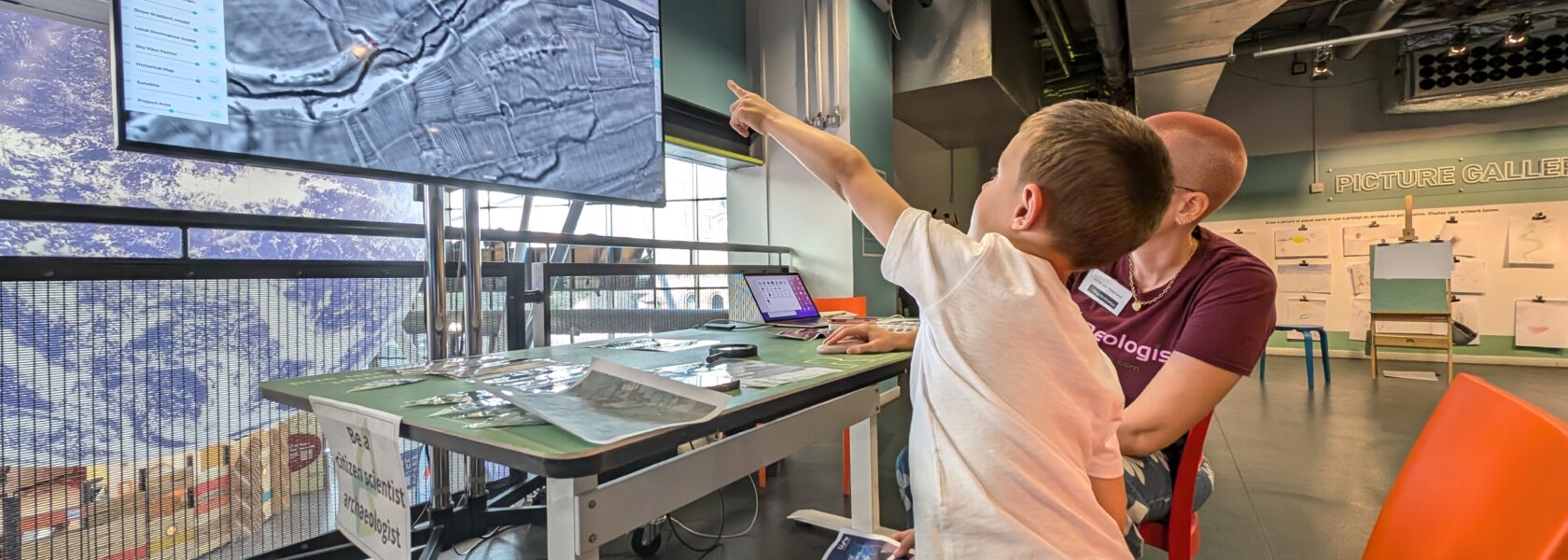
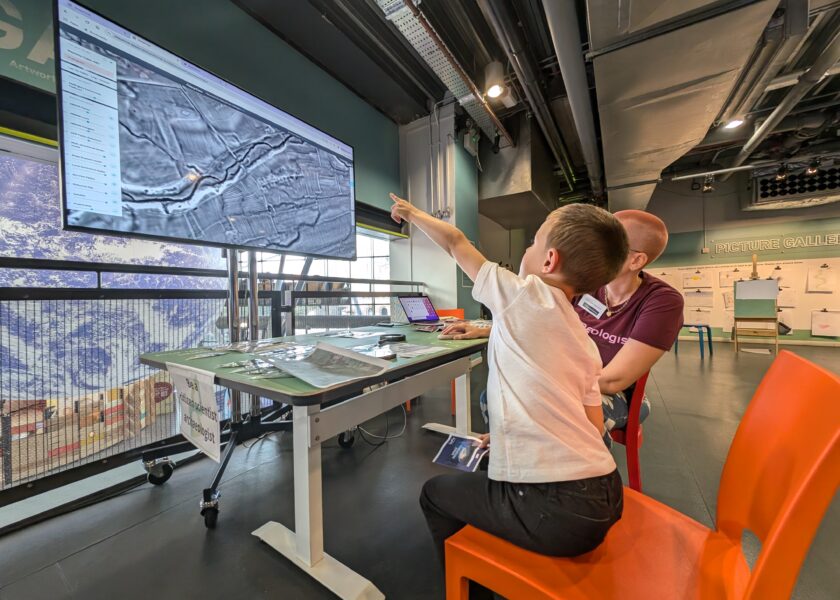
Deep Time’s recent visit to the ‘Spotlight on Space’ dayat the Life Science Centre inNewcastle, engaging children and families with Earth Observation Data and nature recovery © Life Science Centre.
The time is ripe for a new approach, fundamentally reimagining how we value and invest in the landscapes that sustain us. This is the inspiration behind the UK government’s policy turn towards a natural capital approach. Traditional methods of valuing landscapes reduce complex environments to simple economic metrics, overlooking their role in sustaining communities and cultural identity. The concept of natural capital – the collective term for the forests, water, soils, and oceans – moves beyond this shallow framing, encompassing the ecosystem services that landscapes provide to humankind, including food, water, energy, carbon sinks and opportunities for recreation.
A range of Nature-based Solutions, including initiatives like Biodiversity Net Gain and Local Nature Recovery Strategies, are incentivising investment in nature recovery. These ambitious policies face several critical obstacles, including a lack of comprehensive baseline data about habitats and historic environments; siloed professional structures that treat natural and cultural heritage as separate entities; and barriers to citizen participation and decision-making, diminishing the potential value of the historic and natural landscape for people.
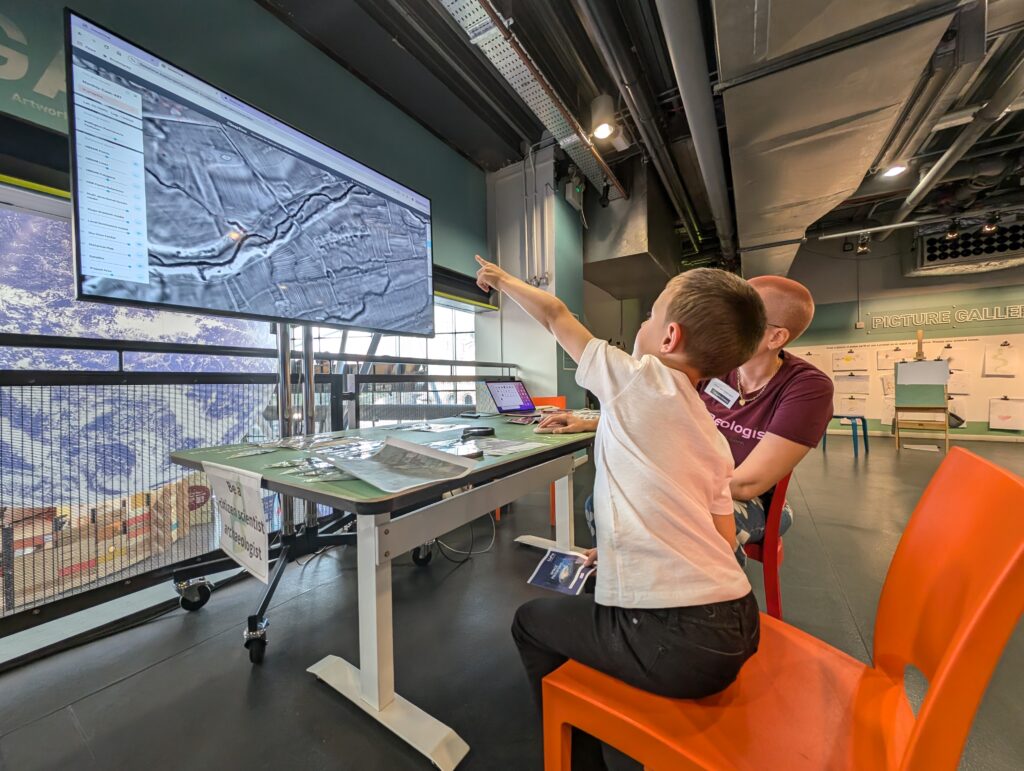
A family-friendly introduction to Earth Observation archaeological feature identification © Life Science Centre.
Deep Time, DV’s innovative crowd platform, rises to this challenge by empowering citizens to map archaeological sites and ecological habitats using satellite imagery and LiDAR. This is achieved through the combination of two key technologies: a participatory Geographic Information System enabling citizens to map and integrate various data sources, and a learning management system training non-specialists to make scientifically valid contributions.
Participants, known as ‘Pastronauts’ and ‘Futurenauts,’ map historic features and current habitats, providing blueprints for future restoration and monitoring nature recovery interventions. Partners access high-quality, actionable data through a dashboard, enabling more informed and immediate decisions on landscape investments and conservation efforts. Reviving historic hedgerows, for instance, can create wildlife corridors and carbon sinks, turning archaeological features into tools for ecological renewal. Other historic features, like shadow woods, ghost ponds, or holloways can also provide potential for future restoration, bridging the gap between citizen participation and nature recovery.

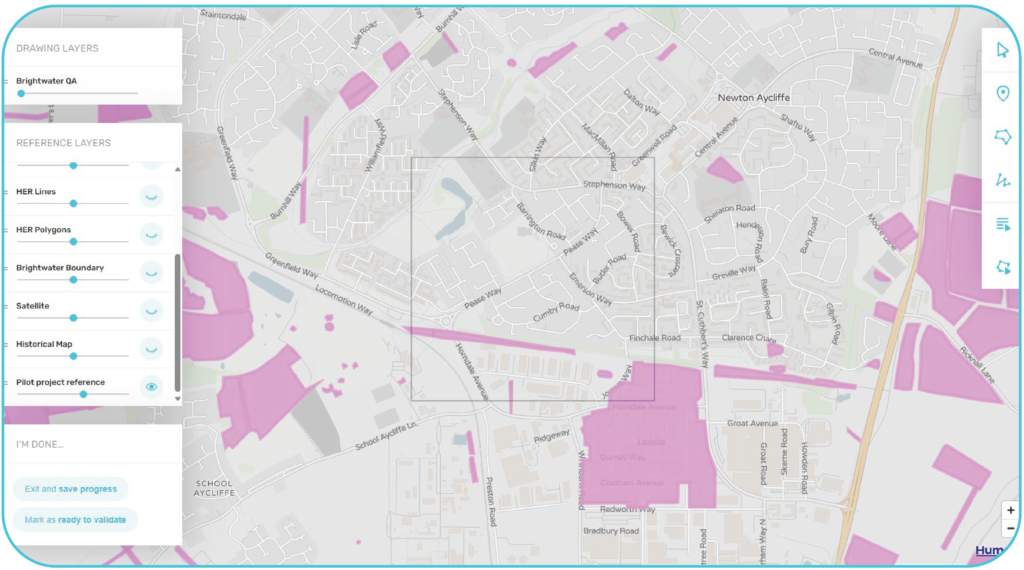
Deep Time’s accessible citizen GIS mapping platform housing multiple Earth Observation layers and drawing tools © DigVentures.
This approach resonates deeply with our crowd, partners and funders, aligning with a collective vision of a more inclusive, sustainable and liveable future. Since our 2021 prototype launch, we’ve secured funding from Nesta, Innovate UK, NLHF’s Heritage Innovation Fund, and EU Horizon 2020’s Impetus fund. The platform has already been validated across 700 km² (equivalent to Greater Manchester), engaging over 1,100 trained citizens. This achievement caught a wave of media attention, with features in The Guardian, BBC Radio 4’s Today Programme, ABC Australia, and NHK Japan. Building on this success, the project has been commissioned by Defra and Natural England’s Natural Capital and Ecosystems Assessment (NCEA) programme, engaging over 6,000 citizens across a 4,500 km² area in partnership with several Wildlife Trusts, National Landscapes, and a National Park.
Archaeology isn’t just about data collection; it’s a process that can shift how society perceives and interacts with our environment. Yet, the standard economic models that underpin mainstream archaeological practice do not capture the full social value of these vital landscape elements. By combining the collective intelligence of people and the power of digital technologies, we can both generate data for nature recovery and provide a tangible pathway for communities to engage in landscape transformation.
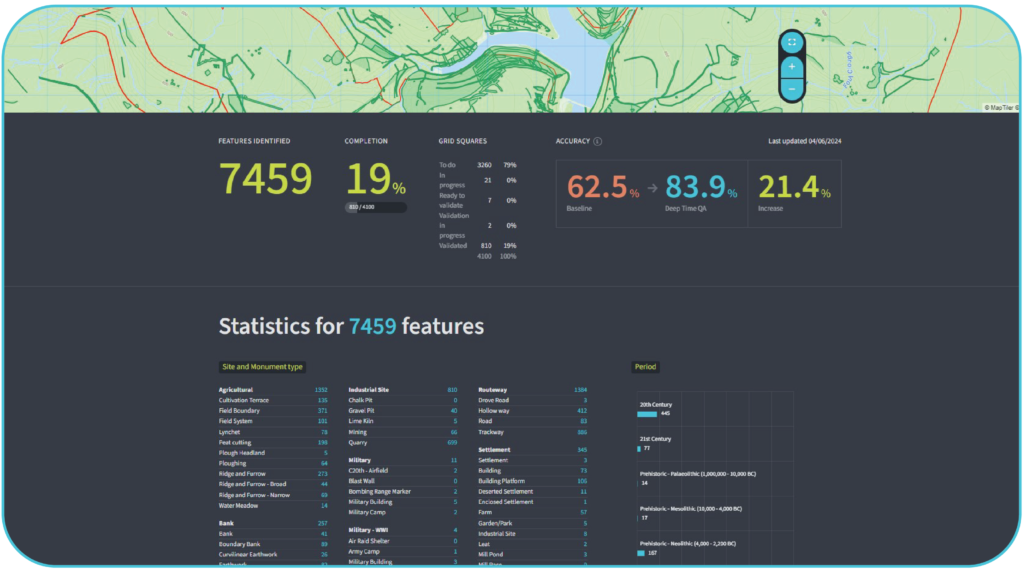
The Deep Time partner dashboard enabling real-time insights and downloads for both landscape and social impact data © DigVentures.