
Amazing Artefacts: King Offa’s Gold Dinar
Meet the Anglo-Saxon king who minted his own golden dinar
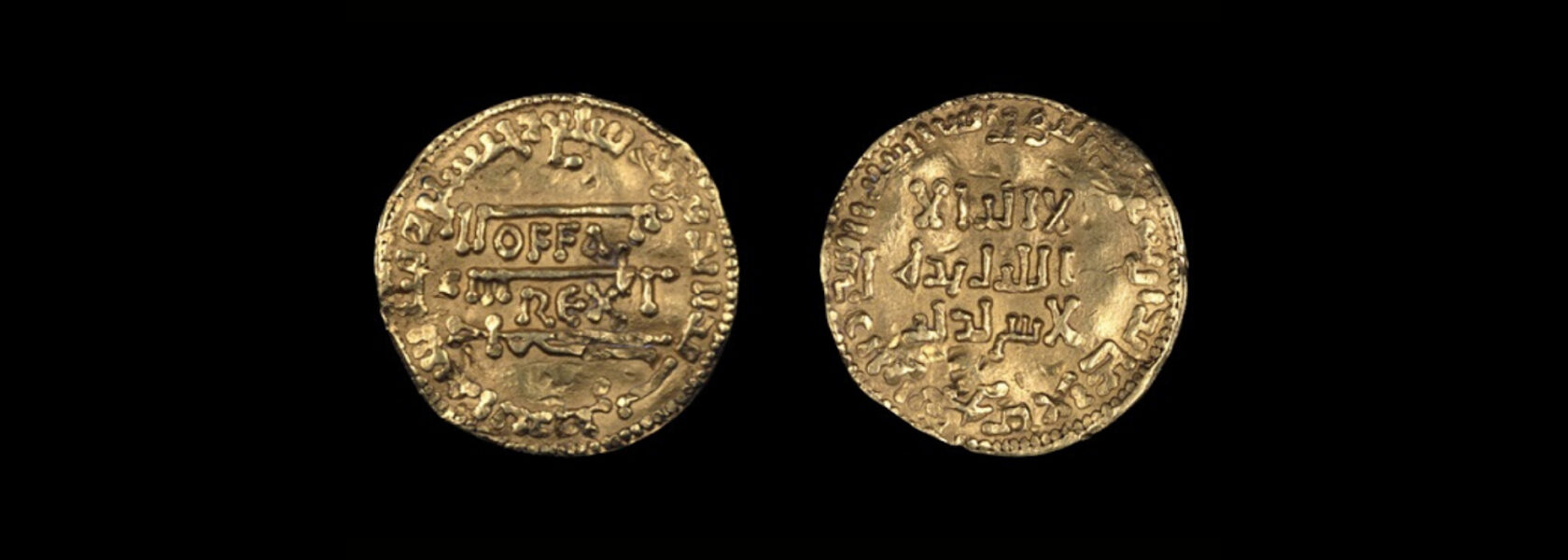
Offa was King of Mercia from 757-796 and was well known for minting currency during his reign. But this gold dinar was unlike any seen in England at the time. On this particular coin, the words ‘OFFA REX’, or King Offa in Latin, are struck on one side, while the other holds the inscription ‘there is no God but Allah alone’ in Arabic.


Image: King Offa’s gold dinar. Credit: British Library.
It is almost identical to one struck by the ruler of the Islamic Abbasid empire, caliph al-Mansur (minus the Latin.) It seems the craftsman wasn’t very knowledgeable when it came to Arabic – the king’s name is actually upside-down in relation to the script above and below!
But why would Offa, a Christian king, mint a golden dinar? Several theories exist including that they were part of a gift to be sent to the pope (oh the irony!), or that he had converted to Islam (unlikely).
In reality, the most likely explanation is either that he was emulating something that was very fashionable at the time, or that the coins were intended for use in international trade in the Mediterranean – especially with Islamic Spain – where gold dinars where the dominant coinage, and are actually thought to have inspired the re-introduction of gold coins into northern Europe.
Gold dinars could be used to buy all the luxuries the elite classes would have wanted, and King Offa’s coin looked very similar to those already in use and would most likely have been an accepted form of currency – with the added bonus of delivering some free PR, Mercia-style.