

Face jugs were all the rage in medieval Britain. South east England was a hub of their production, and they were transported and sold across Europe.
Medieval Britain was packed full of exciting events, bloodthirsty battles and enough intrigue to make an episode of Game of Thrones seem like Coronation Street.
So you might expect that the more mundane aspects of everyday life, like pottery, would bring us archaeologists back down to earth, but if these eight examples are anything to go by, you’ll be surprised.
1. This guy clutching his beard


Medieval face jugs, which were popular for hundreds of years, were often made around the south east in places like Grimston and Kingston-upon-Thames. They generally feature a face with bulging cheeks, impressive beard and hands clutched across the chest, face or beard.
2. This guy clutching his face
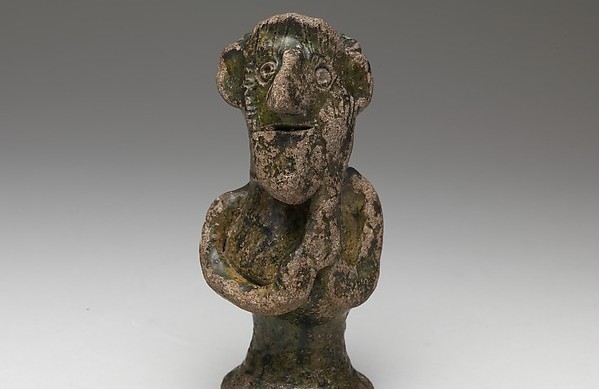

3. This guy just trying to keep a straight face

This rather stern-looking fellow was made during the early 14th century in Grimston, near King’s Lynn in Norfolk. Like Kingston ware, Grimston ware is characteristically decorated with amusing bearded faces, along with pellets and strips. This style of pottery was extremely popular in medieval Britain, and examples have been found as far afield as Norway!
4. This cheeky little chap
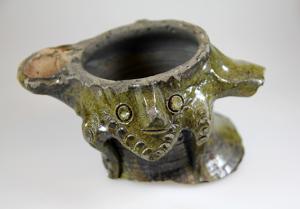

5. This guy who needs two hands to keep drinking
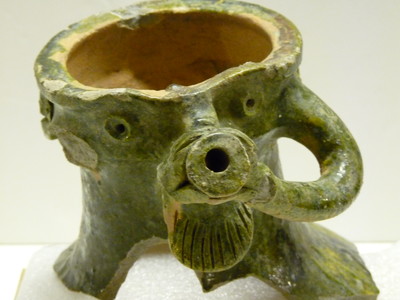

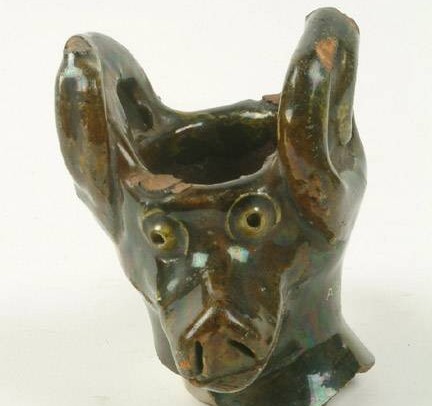
6. This ram’s face that looks more like a bat

7. This French face jug who looks like he might be sick


As you’ve probably guessed, face jugs weren’t just a British fad. This one from France is on display at the British Museum. The hair decoration suggests it might be a monk. Either way, it looks like he’s having considerably less of a good time than his companions.
8. This unusual lady


This red lady is pretty unusual. On display at the V&A, it has been suggested that this anthropomorphic jug is decorated with features characteristic of both sexes. Not only is she red, she’s also got a beard and it seems the body of the pot has been pinched on either side and the clay pulled outwards with the fingers to resemble female breasts with protruding nipples. According to the V&As description “the intention was likely to cause amusement at the dining table when this jug was displayed and used”. Thankfully, this kind of Medieval humour has had its day.
Want to learn more about medieval ceramics? Try Paul Blinkhorn’s Medieval Pottery Masterclass!