
Shrines and sacred spaces came in many forms in Roman Britain – from hidden underground temples known as Mithraea in London, along Hadrian’s Wall where Roman soldiers took part in secretive rituals to the god Mithras, to the grand Temple of Claudius in Colchester, built to honour the emperor as a god.
In Bath, perhaps the most famous religious site from Roman Britain, natural hot springs were viewed as a sacred complex dedicated to Sulis Minerva, and drew people from far and wide in search of healing, protection and divine favour.

Credit: The Roman Baths, Bath
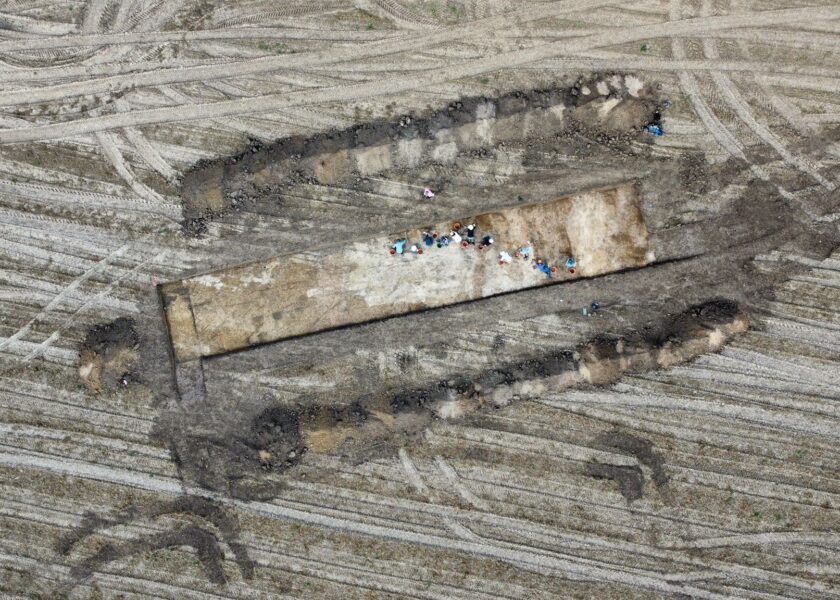
Our dig site is in East Yorkshire, on the banks of where an ancient river once flowed – about a day’s march from several key Roman forts, including Delgovicia near Pocklington, a key road station on the route from York to the Humber, and Derventio south of Malton, one of the region’s best-known military sites.
This year we’re targeting an area where 1950s excavations (and our 2024 test pit) revealed carved stone fragments that we think could be from an altar. Through this exploration, we hope to answer key research questions that could tell us: Have we found a shrine? What was its full size and layout? Who was it devoted to? What offerings were left – and by whom? What did the local population believe? Did their religious practices change the longer they lived in East Yorkshire?
If this is a shrine, it could help us understand how Roman religion, culture and beliefs shaped life in East Yorkshire, and how local communities made them their own in 300-400 AD.
The wider project has seen excavations over several areas on the modern farm where our site is located, showing evidence of a 1st century mansio (a Roman service station) built for travelling dignitaries, a 2nd century ladder settlement (a type of Romano-British village) and a 3rd century Roman villa, possibly awarded to a Roman official for his service.
Alongside buildings, courtyards, defensive ditches, mosaics and rubbish pits, we’ve unearthed a range of artefacts hinting at who lived here in the early decades of Roman occupation, from inscribed stone and high-status Samian ware to more personal finds, including delicately carved bone hair pins.
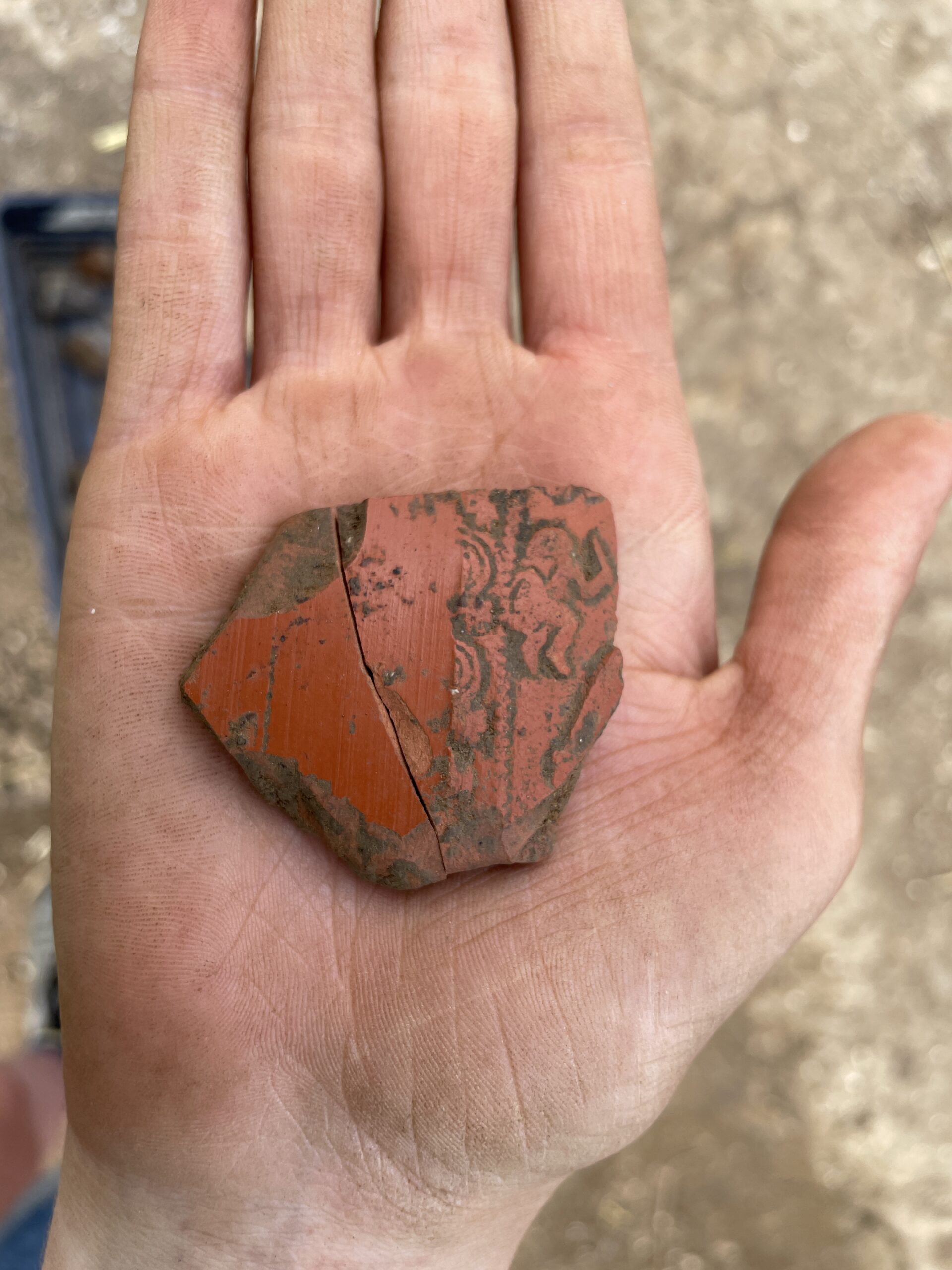
A fragment of Samian Ware. Credit: DigVentures
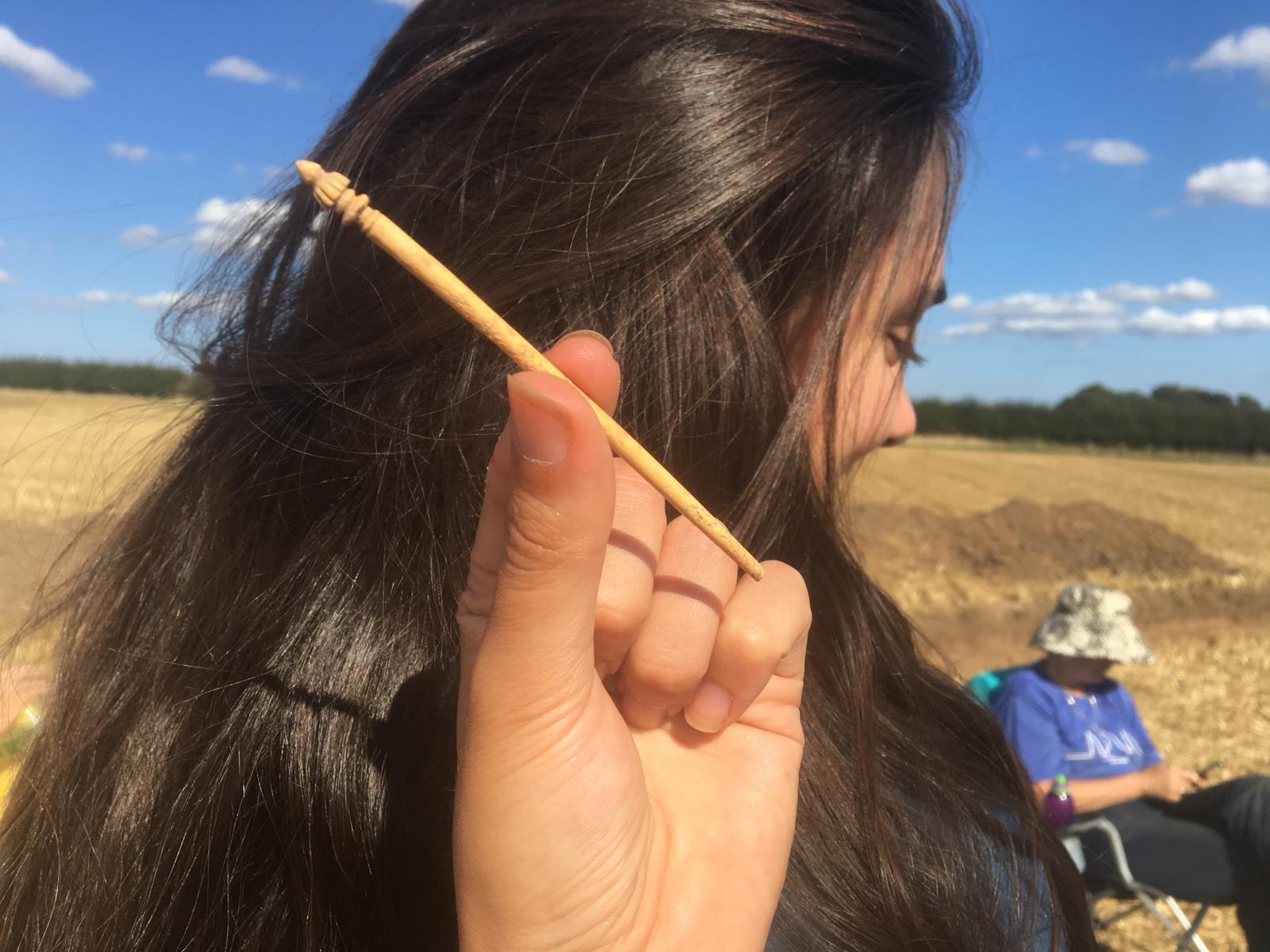
A bone hair pin. Credit: DigVentures
Many finds, including ancient Roman silver coins known as Denarii, date to the 1st century AD, suggesting this could be one of the earliest Roman settlements ever discovered in East Yorkshire. With this season’s investigation into the potential 4th century shrine, we’re building up the bigger picture of how this landscape was in continuous use throughout most of the Roman era.
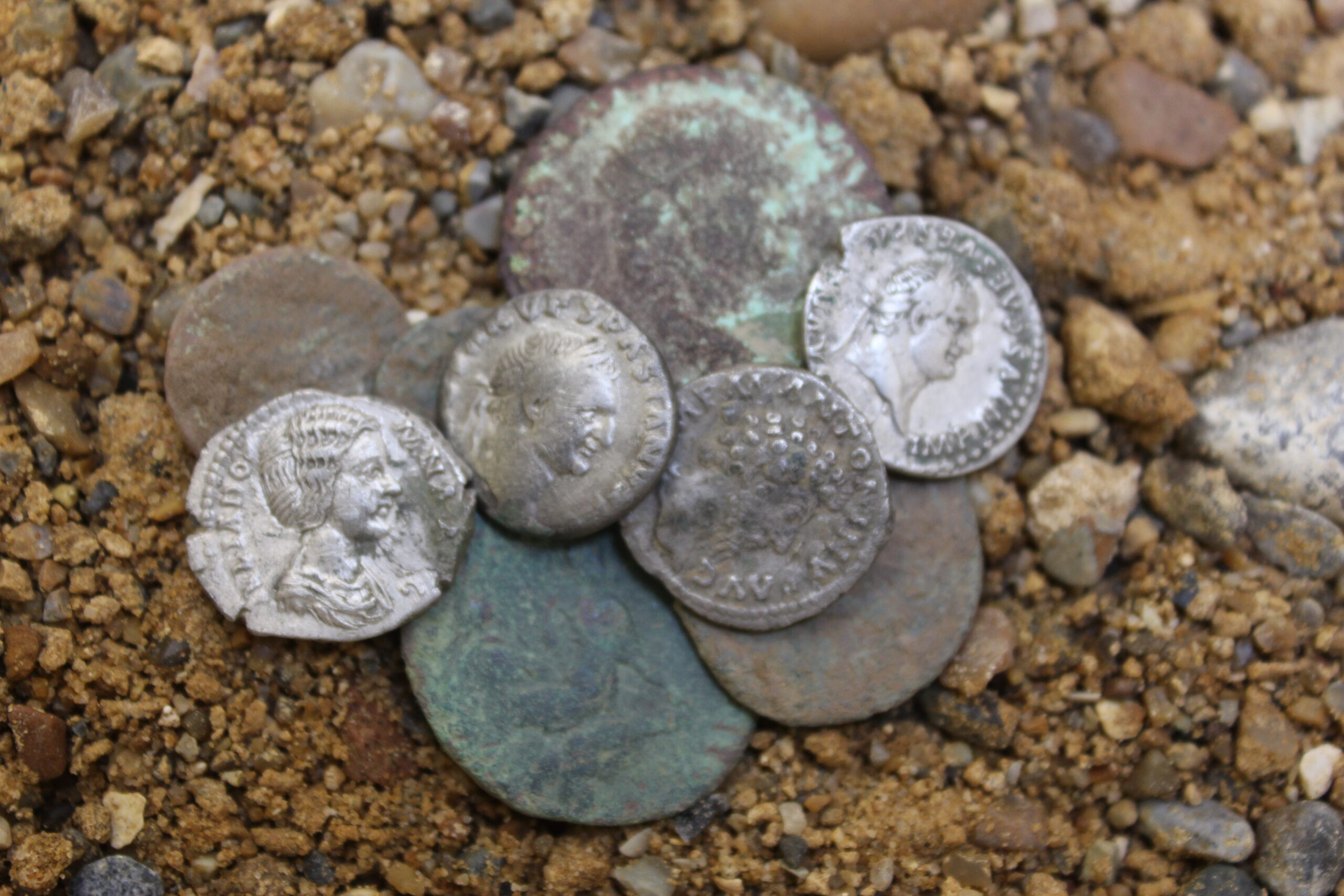
Collection of coins. Credit: DigVentures
From simple, small household shrines to grand stone-built monuments with vaults, podiums and columns, Roman shrines varied from intimate family altars to communal, political and even roadside sanctuaries. Often smaller and less formal than temples, shrines came in all shapes and sizes, reflecting personal devotion, local beliefs and even imperial ideals.
Found in both public and private settings, shrines were often built near water and marked by religious and votive offerings dedicated to specific gods, local spirits and ancestors. Their variety shows just how deeply religion and spirituality were woven into everyday Roman life.
So, why do we think we’ve found one? For starters, the site sits close to the West Beck – the most northerly chalk stream in the UK, and the first water source accessible east of the Yorkshire Wolds; a vital part of life for local people, their animals and their crops throughout history.
We’ve also uncovered a range of finds: votive deposits, small artefact offerings, signs of another Roman building just metres from a possible altar stone discovered back in the 1950s, and a fully intact 4th century Roman beaker.
What’s especially interesting about the beaker is that we found it upside down in a small pit. Finds like this tend to survive intact when they’re placed intentionally, suggesting it could have been a ritual deposit.
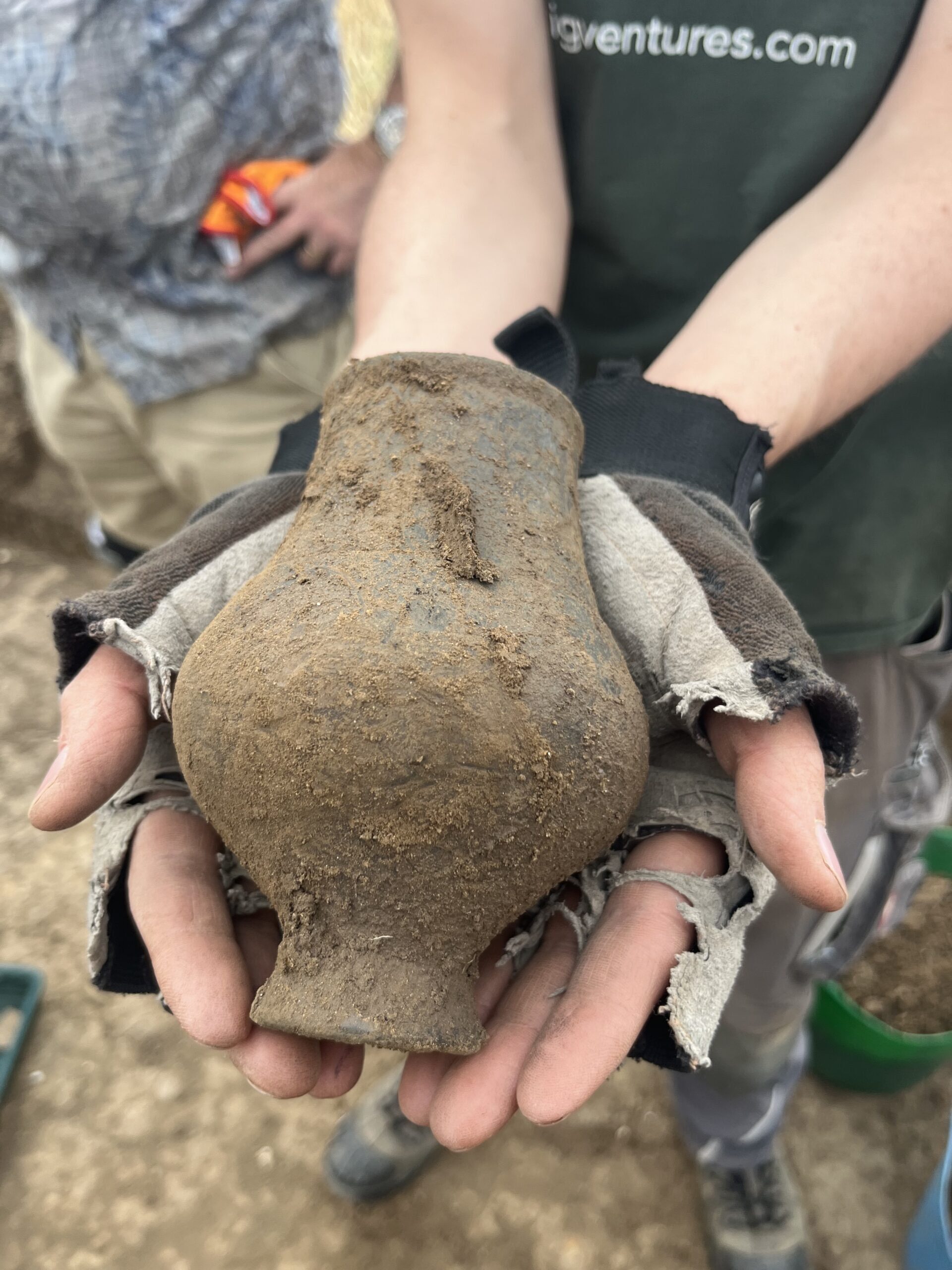
Roman beaker. Credit: DigVentures
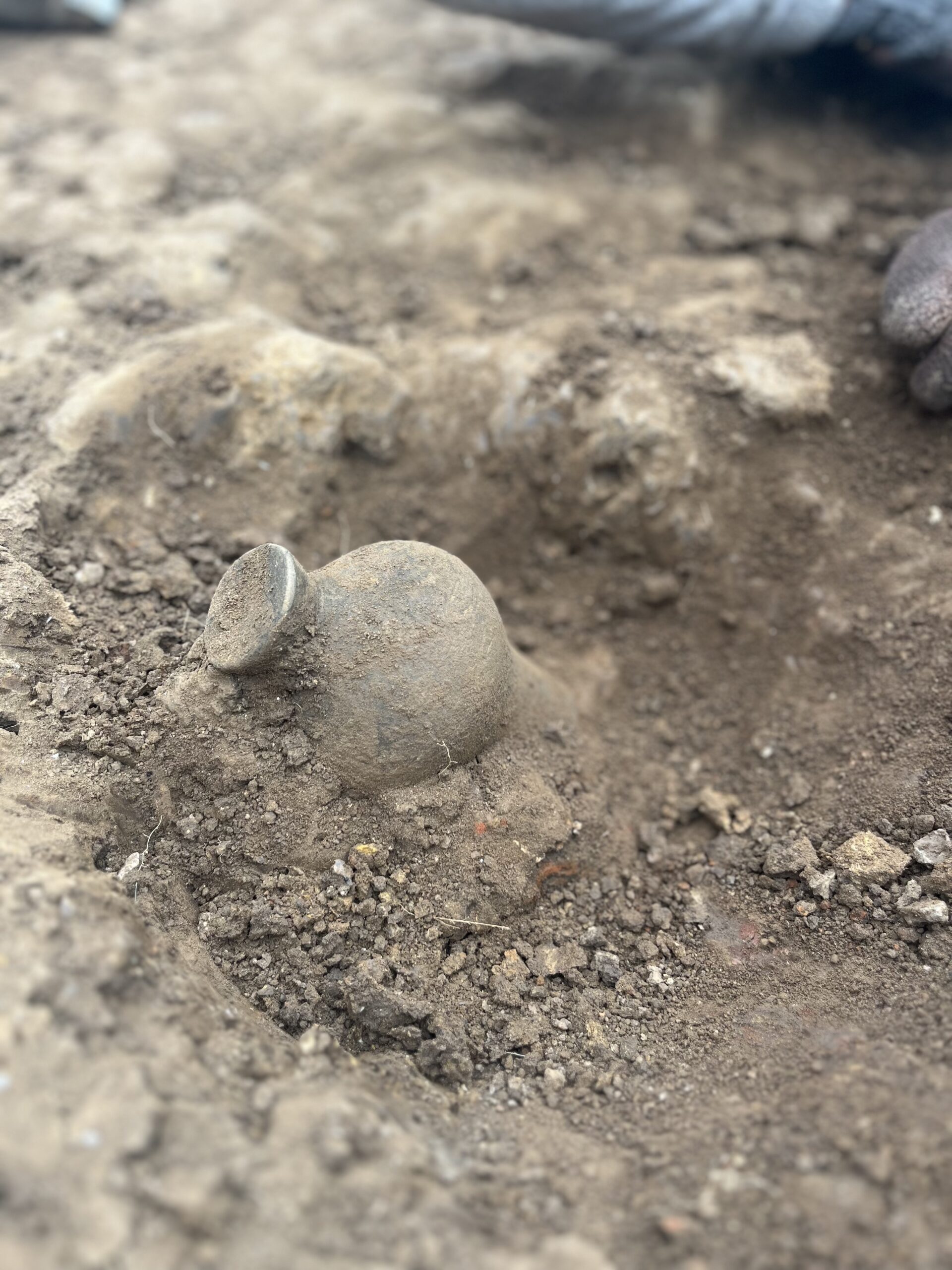
The Roman Beaker in situ. Credit: DigVentures
This leads us to believe the site might’ve been home to a rural shrine; a sacred outdoor space used to worship deities connected to nature. In this case, it may have been dedicated to a local water spirit, with offerings helping to secure (or give thanks for) a fruitful harvest.
Previous excavations have also uncovered 4th century coins, and even meat offerings in small pits, with coins stuck together with a piece of animal bone, indicating they were placed as one single offering.
It’s even possible the local water spirit we suspect was worshipped here could have roots in beliefs held long before the Romans arrived in East Yorkshire, as the people here during Romano-British times were largely local communities from the Iron Age adopting new Roman customs.
While adjusting to new ways of life, many of their older beliefs – including those tied to the nature around them, like rivers – likely remained unchanged. For all we know, this rural shrine could represent an ancient connection to water spirits held in high regard by the local community for generations.
With more excavation, we’re hopeful that we’ll find even more evidence, and perhaps even uncover the remains of a shrine structure waiting patiently to be found.


