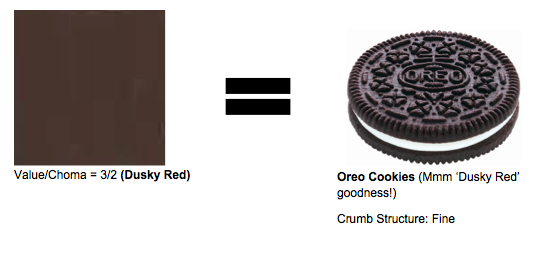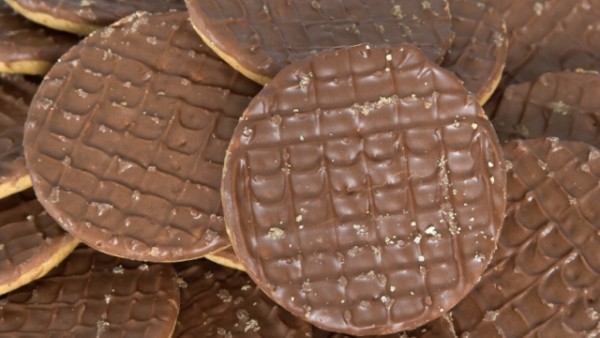

The importance of biscuits in the lives of archaeologists cannot be underestimated. And now, with the DigVentures Biscuit Chart Soil Identification Guide, they’re about to become even more valuable.
Mid-chocolatey brown? Nope, in archaeology, we use the Munsell Colour Chart to describe soil colour.
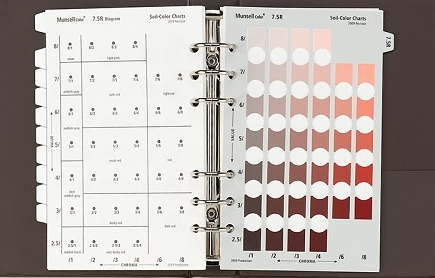
The Munsell Colour Chart
It’s a fairly complex system, consisting of a number of colour cards designated by Hue (a colour’s relation to red, yellow, blue etc.), and divided vertically by Value (lightness) and horizontally by Chroma (strength or intensity).
The colours are grouped together to give descriptions such as ‘dark reddish grey’ or ‘light yellowish brown’. All in all, it can get a bit complicated – especially when all you want is to head into the Site Hut for a cuppa and a cheeky nibble on a biscuit.
So here at DigVentures, we thought to ourselves ‘how can we make the system more user-friendly and easier to understand?’ Five minutes later, the Biscuit Chart was born. We can’t even begin to tell you the long hours of research we put in to quality-control the accuracy of this chart – all in our selfless quest to help you – our fellow archaeologists – have an easier time on site. We love our job!
How it works
The system is fairly straightforward, below are a number of colour samples, arranged by hue, and matched with the biscuit that we think most closely equals the colour.
So if you think it looks a bit Bourbon, now you’ll know it’s Yellowish Red! We’ve even added a crumb structure description to each one.
1. Hue Red