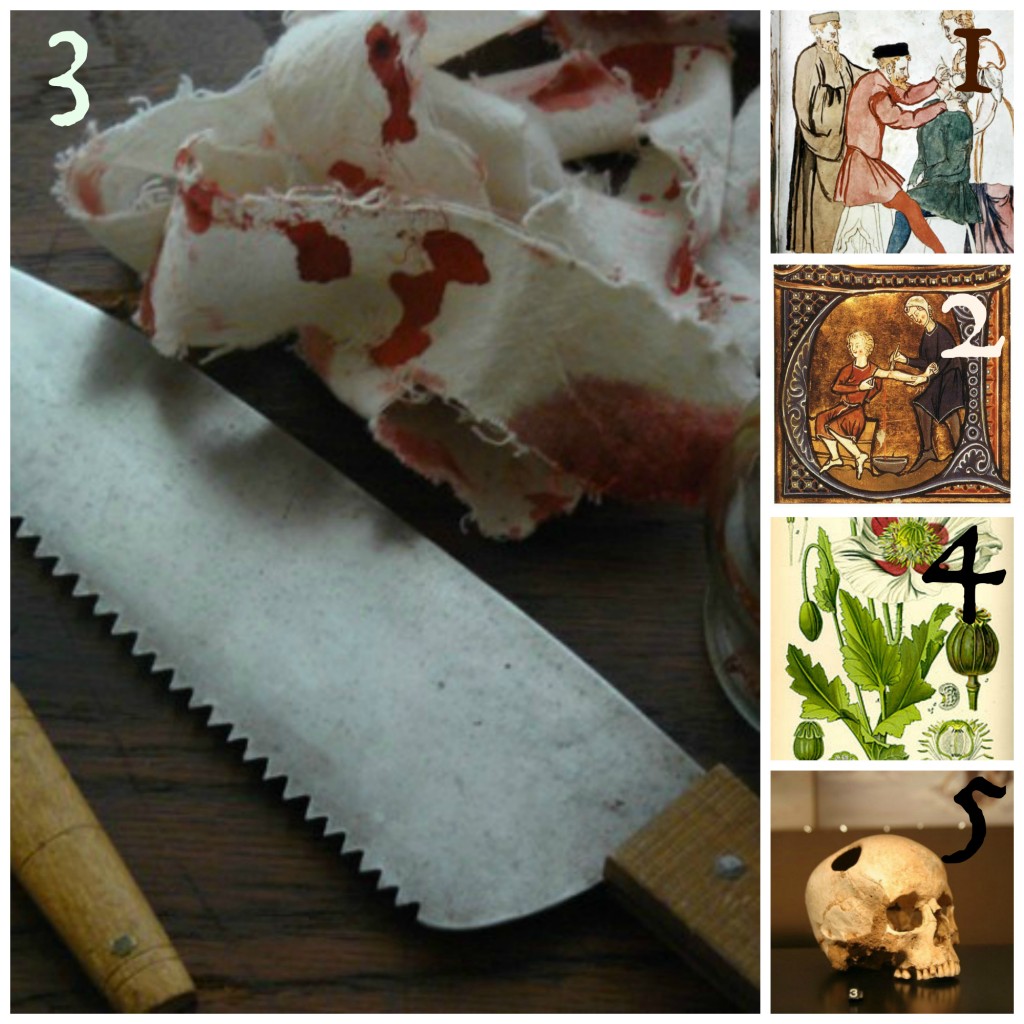

1. Something in your eye?


2. A cure for all ailments
Feeling a bit under the weather? Need a bit of a pick me up? A bit of bloodletting will be sure to get you restored to full life in no time. Whether its smallpox, epilepsy, gout or just about any other illness that exists blood loss will help rebalance your four humours – blood, phlegm, black bile and yellow bile – and so hopefully cure your affliction. Even if there’s nothing really wrong but you just want to keep fit and healthy. Try a little leech to suck up small doses or venesection, the opening of a vein usually using a lancet, for a more thorough cleanse. Feeling faint?
3. Under the knife
If things are more serious and you’re going to need surgery at least you know you’re in safe hands. Anyone who can be proficient in two such differing professions as surgery and hairdressing, as the barber-surgeons operating at the time were, must be a skilled and knowledgeable man. Yes it might be a bit painful due the very limited knowledge of anaesthetics but the surgeon would at least try to keep the wound as clean as possible, urine was sometimes used as an antiseptic as recommended by Henry VIII’s surgeon Thomas Vicary.
4. Deadly Anaesthetic
If the pain is all becoming too much you could always request a glug of dwale, an early attempt at anaesthetic. This was a concoction of various ingredients including lettuce and vinegar mixed with wine. While the wine does admittedly seem like a good idea (if not something stronger), some of the other ingredients not so much. The inclusion of hemlock and opium, if mixed incorrectly, could give a knock-out too far and result in death. Though at this point, with the agony you are sure to be in from the surgeon’s crude techniques and limited knowledge of human anatomy, this may well come as welcome relief.
5. Trepanning
The traumatic experience of medieval medicine may well have left you mentally (and no doubt physically) scarred for life. But don’t worry; we’ve got the perfect cure for all sorts of mental health problems, including epilepsy and migraines. Trepanning involves boring a hole into the skull to expose the brain, thus relieving pressure and hopefully curing your ailment. Admittedly the exposure of the brain to so many airborne germs can in some cases prove to be fatal but hey, you win some you lose some… In fact there is proof of the success of a surprising number of trepanning procedures. The skull of a man from about 1100 was found who, despite been hit over the head with a heavy, blunt object, had survived due to a life-saving trepanning procedure which had lifted a part of the skull allowing bone fragments to be removed.
So next time you complain about the NHS just think back to the medicine of the Middle Ages, and remember it could be much… much worse!